Hillclimbing
Speed hillclimbing is not, as some people think, climbing muddy hills in cars – that is the sport called trials – or informally known as ‘mud-plugging’. Hillclimbing takes place on tarmac tracks usually about 1000 metres long. Drivers and cars compete against the clock on timed ‘runs’. Cars are divided into classes determined by car type (saloon, sports or racing) and engine capacity. Drivers take the course one at a time to take their runs. The driver with the fastest time wins the class or the event.
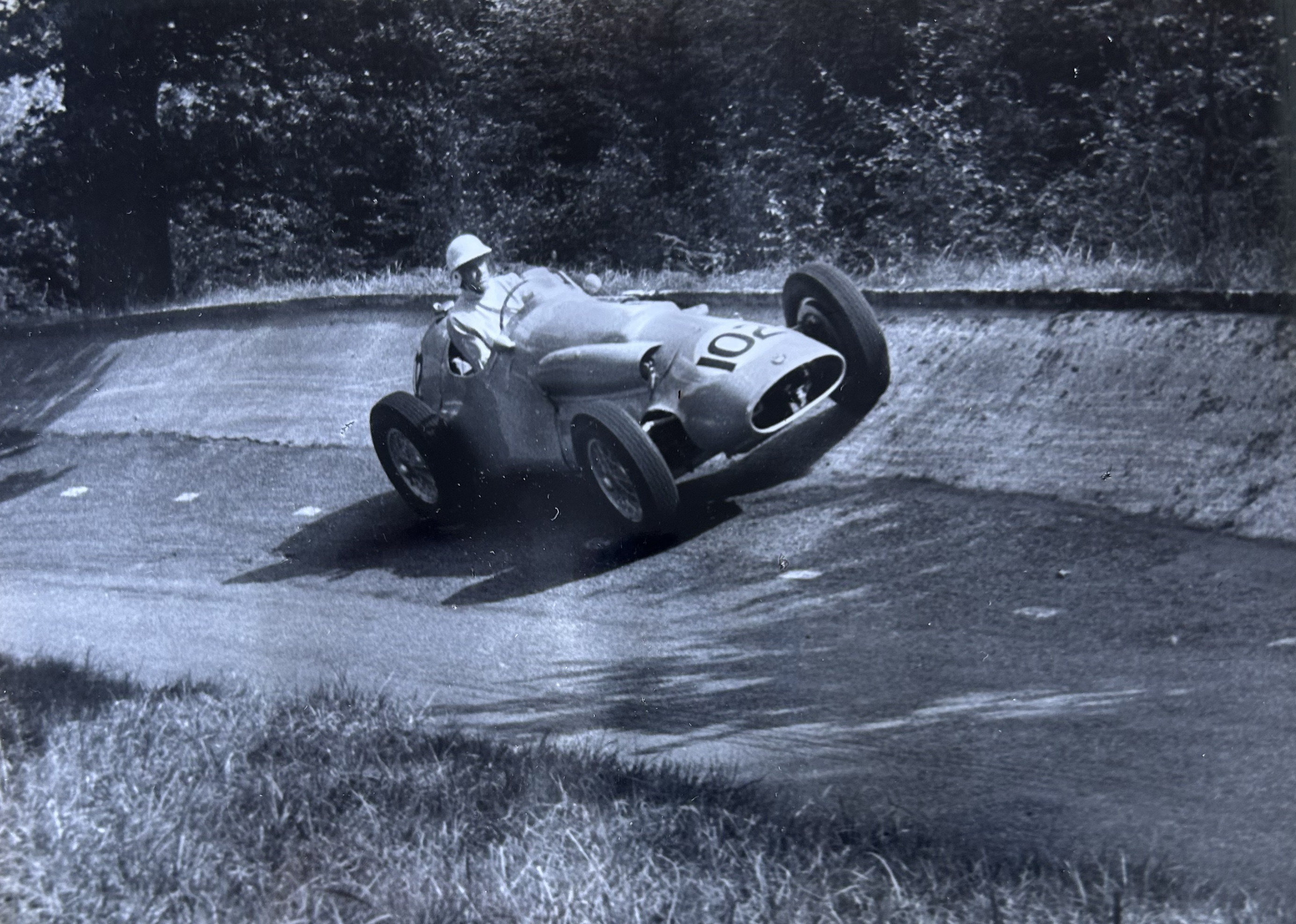
The Great Auclum speed trials and hillclimbs took place in Burghfield Common, near Reading in Berkshire. The first event ran in 1938 and the curtain fell after the 1974 meeting. Over the years many famous names competed at Great Auclum including Roy Salvadori, Stirling Moss and Colin Chapman.
The race track was in fact the drive-way to Great Auclum House and the surrounding land was a working farm. Only one meeting per year was held at Great Auclum and each one was imbued with a garden-party atmosphere.
The course was 440 yards long and featured a downhill start before entering a steeply banked right-hand bend. The track then snaked steeply up through trees towards the finish line near the house itself.

The first post-war meeting was staged in August 1947 and was organised by the Hants & Berks Motor Club. The event received positive reviews in motoring magazines – particularly for the smooth running of the event.

In 1959, Great Auclum was awarded a round of the prestigious RAC British Hill Climb Championship. A status that was retained for every subsequent event.
By 1973 the cars and drivers had become so fast that the outright hill record was set by Chris Cramer in a March 723 in a time of 17.65.
In truth, the sport had outgrown the venue and it is doubtful whether Great Auclum would have maintained RAC British Hill Climb Championship status much beyond the final event in 1974.
After Neil Gardiner died in 1973, the house was sold and much of the estate redeveloped for housing. The course still exists but is overgrown and in generally poor condition. The land – and track – is still owned by the Gardiner family and is private property with no public access.
For more information about the track itself, please visit see the post here.